• Bordeaux … and what brought us here

    bordeaux-tourisme-6-2

    © http://www.bordeaux-tourisme.com/

    It was a sullen rain-soaked January day in 2008 when Mr Gallivant and I first came upon the belle dame that is Bordeaux. On a whim a week or so before, we’d talked about moving to France. As you do. New year, new beginnings and all that. After as good as three years in England, we were quite ready for a change of scene. The balmier climes of the south west corner of the hubby’s homeland were beckoning, even if our first foray to the region happened to be under brooding skies. But we weren’t put off. After all, where much in Europe does offer sunny smiling days in the dead of winter? Better to see the city draped in her dismal off-season cloak at the outset and our expectations could only rise.

    1930733_39639371413_9767_n-2We really knew nothing about Bordeaux. Except that she is famous for her world-class wines. A rash rifle through an atlas one reckless evening changed all that. If we were to relocate to France, it had to be to someplace that ticked all the boxes – a suitably-sized city a stone’s throw from the coast with summers worth celebrating, some friends in the surroundings, culturally and aesthetically satisfying, sufficient connection to the outside world, oh and why not throw in some great food and several bottles of that illustrious wine, as well as proximity to the Pyrenees and Spain, for good measure. Toulouse was in the offing, but just about got pipped at the post for being too inland; and Biarritz for being a touch too small a town for us.

    So Bordeaux was basking on her laurels before we’d even set foot in the city. We booked the flights, arranged to stay with a good friend living locally and set off on a recce for the successor in a long line of the perfect place to live. And we were easily swayed in spite of the wet weather that sombre January weekend, for just four days later back home in Oxford and our house was on the market with a May moving date in mind.
    bordeaux-tourisme-10

    © http://www.bordeaux-tourisme.com/

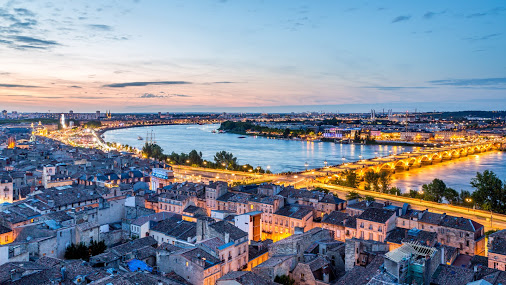
    Now it’s nearly nine years on, and we haven’t regretted our choice to settle here one bit. Bordeaux is quite simply a beautiful city. Poised like a pearl on a broad bend of the River Garonne, a few kilometres downstream of its course into the Gironde Estuary and the Atlantic Ocean beyond, she is a city both compact and bijou with a cosmopolitan mix into the bag. A city that has stood the test of time.
    bordeaux-tourisme-11

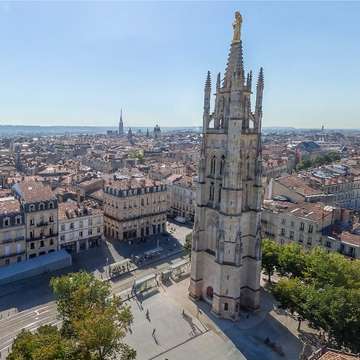
    Tour Pey Berland © http://www.bordeaux-tourisme.com/

    A little history …

    • First inhabited some 2,000 years or more ago by Celts for her strategic position, the settlement later fell to the Romans, who named her Burdigala and introduced the vine to the region with its favourable oceanic climate of long warm summers and mild winters.
    • A rather fallow period followed in the life of the former Roman capital of the south west until the 12th century and the marriage of Eleanor of Aquitaine to Henry II of England, when the city once again flourished thanks to its wine trade.
    • By the 18th century, Bordeaux was well and truly garnering from her golden age and most of the grandiose architectural delights in the centre and along the quays date from this period. In fact, when Baron Haussmann was commissioned by Napoléon III in the mid-19th century to update the still-antiquated architecture of Paris and position her as a capital city on a world scale, it was to the grand boulevards, open spaces and neoclassical limestone buildings of Bordeaux that he turned for inspiration.
    bordeaux tourisme 7.jpg

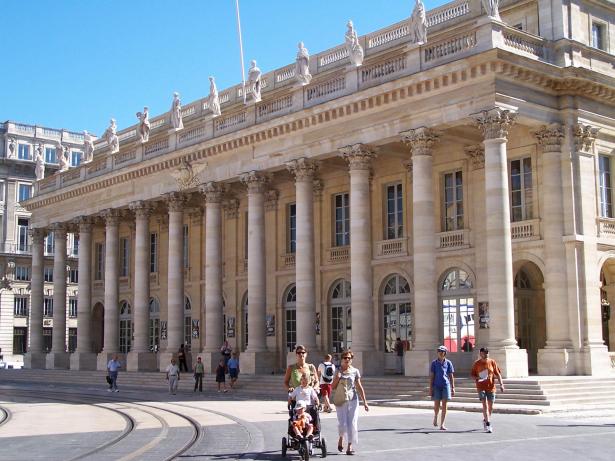
    Bordeaux Opera House © http://www.bordeaux-tourisme.com/

    • All the same, Bordeaux began once more to experience a bit of a lull in the history books and for many years was nicknamed La Belle Endormie – Sleeping Beauty – for the city’s old centre had steadily deteriorated over time; the elegant façades of those once noble buildings now black from pollution and years of neglect.
    • Cue Bordeaux mayor and former French prime minister, Alain Juppé, who instated a regeneration project in the 1990s to spruce up the historic city and restore her to her former glory. Bordeaux has since gained a new lease of life: the harmonious old town and riverfront buildings have had a magnificent makeover rendering them to their glorious honey-coloured grandeur; the ribbon of riverbank reclaimed from a sorry state of ruin and transformed into a sweeping swathe of leisurely pursuits along the Garonne for promenading, pedalling or perusing the world go by; boulevards pedestrianised; and a high-tech sleek and smart tram system installed. Merci, Monsieur Juppé !

    bordeaux-tourisme-8

    The Quays © http://www.bordeaux-tourisme.com/

    Thanks to this recent renaissance, Bordeaux was designated UNESCO status in 2007 – the largest urban heritage site in the world noted for her ‘outstanding urban and architectural ensemble of the 18th century’. Bordeaux is also classified as a ‘city of art and history’, home to 362 monuments historiques – only in Paris are there more – with remarkable Roman vestiges and medieval relics rubbing shoulders with the amalgam of elaborate 18th-century buildings.

    bordeaux-tourisme-9-2

    La Grosse Cloche © http://www.bordeaux-tourisme.com/

    What’s more, the city proudly paraded the title of European Best Destination in 2015, and has recently received more richly deserved accolades –Lonely Planet votes Bordeaux the world’s top city to visit in 2017, the Los Angeles Times likewise marks the city as a must-see for the year ahead, and CNN also selects Bordeaux in its 17 best places to visit in 2017. And if that isn’t credit enough, July 2017 sees the completion of the LGV high-speed train – Ligne de Grande Vitesse – which will put this prominent south west city just two hours from Paris. Bordeaux is now indisputably stirring from a century or so of slumber, newly revived and ready to take on the stalwarts of Europe. No wonder she is constantly chosen as one of the best places to live in France.
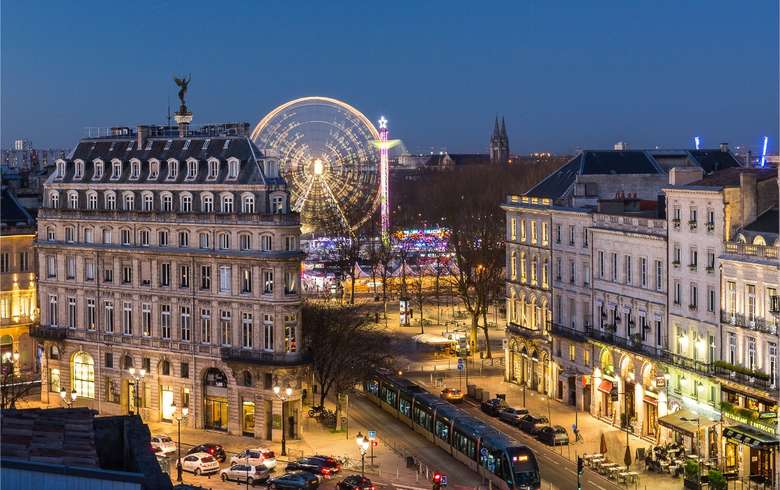
    bordeaux-tourisme-4

    © http://www.bordeaux-tourisme.com/

    And so this well-heeled city, born essentially of a wine trade spanning centuries, finds herself in the spotlight once again. There may be an underlying pinch of bourgeois privilege that exudes – the smug Bordelais do have to live up to their world-class wine reputation after all – but beneath the self-satisfaction lies a dynamic and sophisticated city bursting to be put on the map. Until recently, she hadn’t really been part and parcel of Europe’s established city destinations, but the last few years has seen an increasing influx of visitors dropping by. In 2016 alone, La Cité du Vin, a state-of-the-art museum dedicated to wine and dubbed ‘the world’s first wine theme park’ opened to the public, and the brand new Matmut Atlantique stadium hosted several of the Euro 2016 football matches, both swelling tourism to the city tenfold.
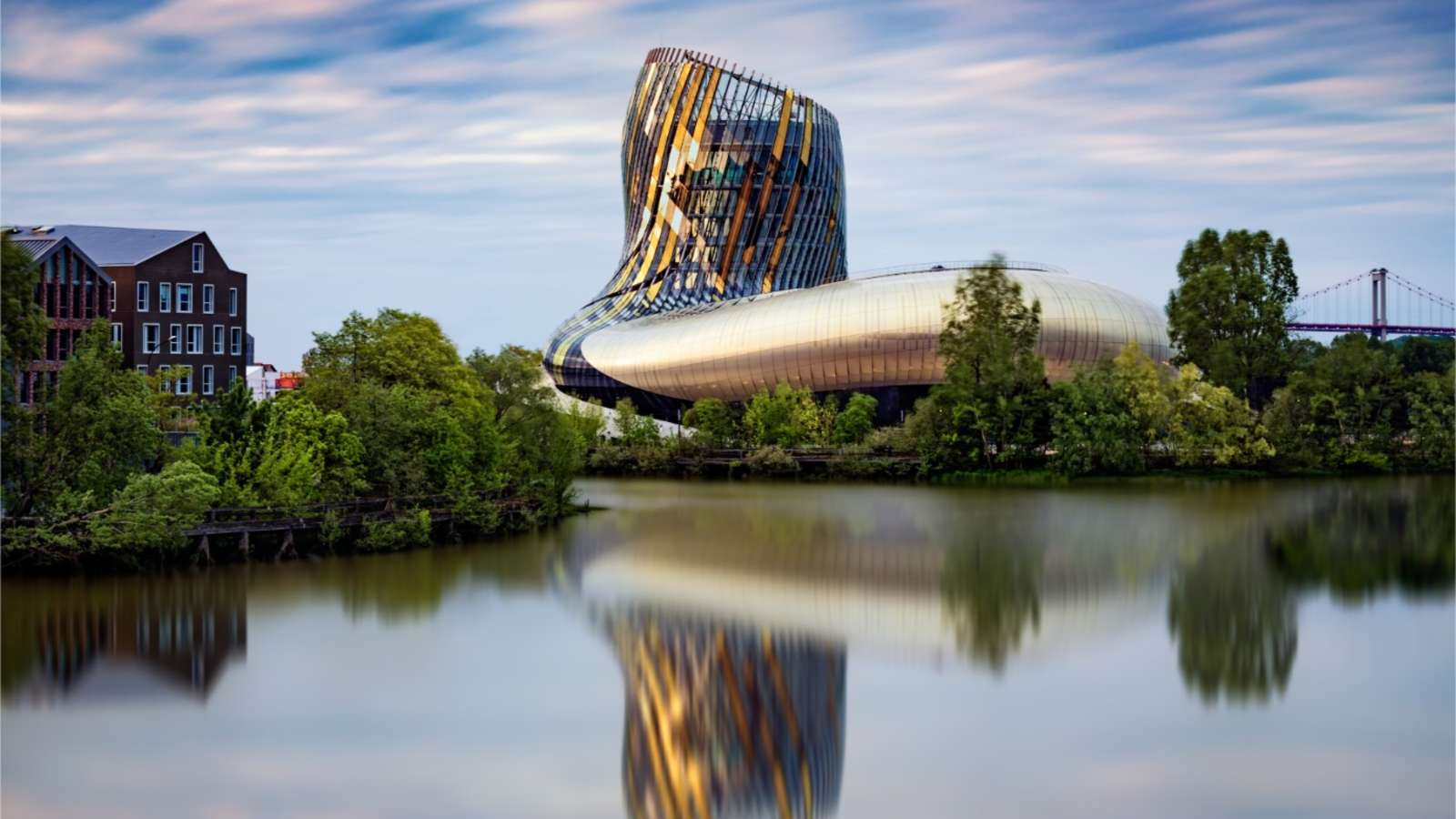
    bordeaux-tourisme-1

    La Cité du Vin © http://www.bordeaux-tourisme.com/

    As for me, the city was a coup de coeur from the very first. I fell in love with her grace and style that bleak winter’s day all those years ago. Mr Gallivant too. We felt a sense of belonging about the place; so much so that we had to make Bordeaux our new base. It may have been on impulse, but when we arrived into town after the long drive from England on a warm and welcoming early June evening six months on from our first foray to the city, about to embark on self-employed careers and with baby plans in mind, it truly felt like coming home. I am sure one day our path will take us elsewhere – we have never been ones to stay put for too long, even if Bordeaux has been a longer stretch than most – but this is a place that will always remain an inherent part of us. We have an intrinsic connection to the city and her surroundings, and our beautiful children were born here making it all the more deep-rooted in our souls.
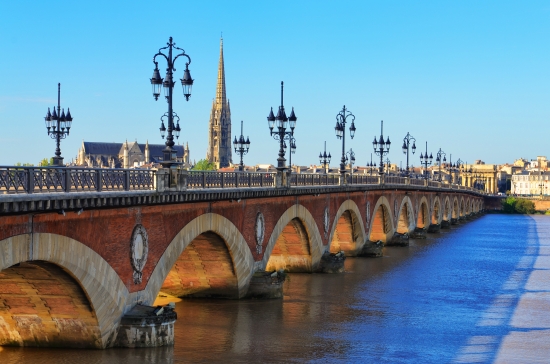
    Bordeaux river bridge with St Michel cathedral

    © http://www.larousse.fr/

  • Far from the Amalfi crowd

    We’re in Italy celebrating Mr Gallivant’s BIG birthday, and after a few treasured days in Rome it’s time to head south for a week on the Sorrentine Peninsula. This is a first for all three of us – Sweet Pea is still but a distant dreamy hope – and I’m thrilled to be discovering the coastal delights of Campania at last. But first up and we need to actually find our destination. It’s not so easy on the snaking hairpin roads that suffuse the rocky 40-mile or so protruding headland once off the highway, particularly in the hammering rain as night hones in around us and with no GPS to our name.

    massalubrense91
    The Sorrentine Peninsula with Mount Vesuvius in the background © http://www.lubracasarelax.it

    We pick up a route from the A3 autostrada shortly after Pompeii that meanders the Lattari Mountains – the physical backbone of this promontory of land so illustrious in Italy for its staggering scenery – and head towards the setting sun along a surplus of switchback bends hoping to soon stumble upon the village of Schiazzano, for if not the peninsula will at some point simply tumble into the Tyrrhenian Sea. We do at least have a rudimentary map, our one saving grace. And an hour or so after leaving the motorway we eventually take up a road that loops and lolls across the rugged landscape and leads us ultimately to the tiny little hilltop hamlet at the western tip where we will be staying for the week ahead.

    It’s perfectly dark now and still the rain pours down. The remoteness in which we find ourselves has us doubting if we’ve even reached the right destination. There are no signs of life in the village and certainly no signs hinting at a charming boutique hotel. I leave the boys safe and dry in the car and dart up a steeply sloping pathway in the deluge to pinpoint this Sorrentine sanctuary of ours disguising itself as an enchanting place to stay. It has to be up here; we’ve just come along the only road into the village and it leads to a dead end.

    © http://www.lubracasarelax.it/system/images/lubralogo/LubraLogo.png

    And then I spy the logo for Lubra Casa Relax winking warmly by the light of a street lamp in the wet night, its rooftop motif set alongside a mammoth oak door. Within moments, I’m being embraced by Mamma Lucia as though a long-lost niece, and any lingering doubts are all at once dispelled.

    lubracasarelaxdetail41
    © http://www.lubracasarelax.it

    I’m ushered into a beautiful covered courtyard bestowing a barrel vault ceiling adorned with original 18th-century frescoes. The building itself dates from the 16th century and was once upon a time occupied by the parish priests of the village. Now it is run as a comfortable haven by the lovely Lucia and her family for those seeking solace away from the hectic coastal haunts, high up on a hill giving onto the most magnificent views of the Bay of Naples.

    The boys join me and we’re led through the family’s living quarters where an elderly relative is gripped by a game of football on the tin box of a TV set in the corner of the room. I’d read that the place was unashamedly a home from home, and as long as the indisputable warm welcome of an extensive Italian family doesn’t unsettle you, this indulgent little guesthouse is the ideal antidote to the bustling, over-budget places to stay all along the built-up coastline. What’s more, we arrive at a time of year which is still reasonably quiet and only one other of the six rooms is occupied. Quite wonderfully, we practically have the place to ourselves – well, along with the very welcoming family whose own premises is right next door.

    lubracasarelaxswimmingpool51
    © http://www.lubracasarelax.it

    We’re booked into the Ligea Suite, named after the queen of the mermaids – all six bedrooms are individually decorated to personify a mermaid from the Myth of Ulysses as an intimation to the maritime past of the peninsula; and the name Lubra itself comes from lubrum, which is Latin for ‘Temple of the mermaids’. The suite comprises two double rooms – one up, one down – separated by a stone stairway, but annexed off as your own private quarters by a sliding door for those staying as a family. Some of the other rooms have a sofa bed for either a triple or quadruple alternative, but it was our very own rooftop terrace that swung the suite option for us. And the next morning – the incessant rain of the previous day a distant memory – we wake to an impeccably blue sky and the most panoramic vistas from our private sundeck imaginable. To the west, the island of Ischia formidably obtrudes from iridescent waters. And across the sea to the east, Italy’s third city of Naples sprawls along the shoreline in the shadow of Mount Vesuvius. It’s all absolutely splendido!

    We’d arrived late the evening before so, after a substantial Italian breakfast sourced from local products, we take a tour of the small but superb little property on our first morning. Its lofty location means Lubra Casa Relax has no end of spectacular seascapes everywhere you look, and the petite pool terrace is the perfect setting on which to relax and savour the surrounding natural scenery. And there’s no shortage of other advantageously placed patio areas around the residence to appreciate the beautiful backdrop either.

    Alongside the pool terrace is Lucia’s very own cooking school, which specialises in the art of pizza making. We are after all barely an olive stone’s throw from the birthplace of pizza across the bay in Naples, and as we unwind by the poolside that first day – Jem and Mr G frolicking in the pocket-sized pool – the delicious smoky scent of pizza baking in the great big wood-burning oven suffuses over us as Lucia’s clients, from as far afield as Australia, busy themselves with kneading a precision-made dough and putting the finishing touches to the perfect Neapolitan pizza.

    Captivated by the culinary delights of Lucia’s kitchen, Jem too is treated to a pizza-making lesson that evening. It’s a whole lot of fun, especially getting to gorge on it afterwards. But nothing quite prepares us for the gastronomic pleasures we’re about to glory in. Each evening for the next week, we experience a true cornucopia of Lucia’s classic Italian cuisine. Simple, natural ingredients crafted exquisitely to create the most unassuming yet lip-smackingly appetizing of local foods. Lucia is a first-rate chef, and her fresh, seasonal fare foraged from the Massa Lubrense area is quite frankly among the best food we’ve ever eaten. Her creations are so good that we can’t wait for our meal each evening – mouthwatering antipasti of eggplant, peppers, tomatoes mixed with Sorrrentine flavours, hunks of salt-encrusted focaccia (out of this world!), Caprese pasta dishes prepared in the traditional way of neighbouring Capri, and of course the pizza. Lucia’s homemade pizza. Prepared before our very eyes and baked in the wood oven beside us. It’s heavenly. Just divine! The secret to exquisite pizza, Lucia affirms, is all in the dough – the right amount of each ingredient, the right kneading technique and the right leavening time. And she gets it just right every time, for all the pizzas we polish off during our week at Lubra Casa Relax are perfection.

    restaurant © http://www.lubracasarelax.it

    And so our week on the Sorrentine Peninsula hastens all too quickly in a glorious haze of luscious food, lazy poolside moments and lots of sightseeing encompassing the enormity of things to see in the locale.

    20150501_1636301Following in the footsteps of the 19th-century foreigners on their grand tours of Italy before us, we delve into the delights of Sorrento, holiday hotspot of the Romans back in the day. Settled on strapping cliffs outcropping into the Bay of Naples, it is nowadays a cutesy coastal tourist trap engorged with souvenir shops selling a surfeit of citrus-based goods. The town is nonetheless a great base for taking the boat out to neighbouring Naples or the islands, and the views of Sorrento from the sea roosting along its rugged rock face are remarkably special.

    naples_cnt_24nov09_istock_1
    © http://www.cntraveller.com/guides/europe/italy/naples

    We sail across the bay to the sprawling, spirited city of Naples one day. Capital of Italy’s Campania region, she is unassumingly home to the largest historic centre of any European city and is a UNESCO World Heritage Site. Meandering the rousing, energetic streets of the centro storico really is a magical experience; the gritty, disintegrating architecture still grasps onto a glimmer of the city’s glory days concealed in the layers of crumbling cornices and peeling paintwork, yet it continues to be a colourful Mediterranean metropolis satiated with spark, culinary savoir-faire and surprising charm.

    We cruise over to Capri another day. The island rises wraithlike from indigo waters, its rocky limestone cliffs towering above the Tyrrhenian Sea. In Roman times, it inextricably played host to the excesses of hedonistic emperors, and to this day remains a playground paradise for the well-heeled. Capri Town itself is tourist intemperance at its utmost with designer stores, high-end hotels and flocks of the fashionable set flaunting themselves along the picturesque, narrow streets. Fortunately, this is all in contrast to the charm of Capri as a whole, where away from the tourist spots a serenity holds sway allowing the natural beauty of the island to shine and the mythical allure of long ago to linger stealthily in the unseen.

    We head to Pompeii and Herculaneum, about an hour’s drive away, on another occasion. It’s been a longing of mine since a child to visit these archaeological sites and I’m beyond excited. Jem less so about seeing a pile of yet more old stone ruins; it was only a few days ago after all that he was being dragged around the Forum in Rome. Until, that is, he gets to see the perfectly preserved remains of real humans and begins to put the whole eruption of Mount Vesuvius into perspective. The past can indeed be more interesting when acquainted with how people came to their grisly ends! The sites are a fascinating step back in time, made all the more ominous with the soaring Mount Vesuvius setting a menacing backdrop; an unyielding threat to the three million people living around. The last major eruption was over 70 years ago and devastated several villages in the vicinity; another outburst from Europe’s most deadly mainland volcano is inevitably in the offing.

    On a lighter note, the next day we head to the beach at Marina del Cantone, a few kilometres from Schiazzano on the south coast of the peninsula. The drive along the looping, dipping road that wraps around the coastline en route to Termini is quite incredible, and gives onto the most dazzling views of Capri. The beach itself is pebbly – the Amalfi Coast is after all synonymous with dramatic scenery and not at all for a sun-bleached sandy shoreline – but is the closest to Lubra Casa Relax if you’re tempted by a dip in the turquoise waters of the Tyrrhenian Sea.

    And perhaps most special of all, we take a drive on several occasions along the celebrated Amalfi Coast. This is the spectacular coastline that spans the southern stretch of the peninsula, while Sorrento overlooks Naples on the northern shore – a common oversight by many who seem to think the towns of Amalfi and Sorrento share the same coast. All the same, the road that threads the two sides together offers some staggering scenery, and is only a stone’s throw from Schiazzano. A little beyond Sant Agata, be sure to stop off at some of the viewing points to take in the panoramic vistas of both sides of the peninsula.

    20150503_1337021

    The precipitous road picks up again along twisting bends through a breathtaking terrain of stunning seascapes towards Positano. So this is the captivating Amalfi Coast route I’ve heard so much about. And it lives up to every expectation. We’re visiting the area in late April, and fortunately there are far fewer cars on the road than in peak season, making it the perfect time for a sojourn. The whole Amalfi Coast was designated a UNESCO World Heritage site in 1997 as an ‘outstanding example of a Mediterranean landscape with exceptional cultural and natural scenic values’, and it genuinely is a gorgeously crafted geographic marvel. It’s not for nothing that it’s such a magnet for tourists.

    The road loops on through the superb landscape and eventually leads into Positano, a treat of a pastel-toned town tumbling down a sheer hillside and into the shimmering waters below. Dine on the beach for the best views of the lofty ascent sprawling upwards before you. And be prepared for some challenging climbs as you saunter through the picture-postcard setting afterwards to walk off that profuse pizza and pasta feast, but the views are absolutely worth it.

    The indulgent drive delights even more onwards to Amalfi via Praiano and Conca dei Marini; an endless extravagance of vistas where sparkling sea convenes with vertiginous cliffs and verdant hills studded with villages suspended spectacularly on their verges.

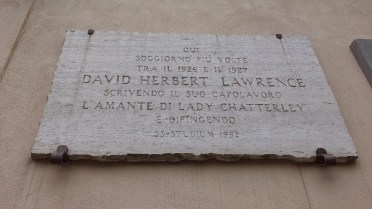
    20150430_1726151Then we ascend into the lush, green hills upwards to Ravello, which to me must be the Amalfi Coast’s crowning glory, a golden nugget of a town graciously nestled atop a giddying stage set of glorious views. There’s a bit less bustle up here than back down in the coastal crowd-pullers, and we get to spend a blissful afternoon ambling along the quiet and charismatic streets, past the 11th-century Duomo, past the places where Richard Wagner composed part of the opera Parsifal and D H Lawrence penned Lady Chatterley’s Lover, past the Villa Rufolo and its striking sea views, past luscious lemon groves and landscaped gardens alive with exotic vegetation; all of this exquisiteness concluding in the splendour of The Gardens of the Villa Cimbrone , a refined and romantic setting with simply the most scenic of terraces, the Terrazzo dell’Infinito, resting on a rocky outcrop and overlooking the expanse of cerulean sea and all that is so inspirational about this stretch of Italian coastline.

    It is with a tinge of woe that we take our leave of Lubra Casa Relax at the end of our wonderful week. And we are resolute that we will one day return. The region itself is enthralling, but what is so special about this boutique retreat is its genuine personal touch. The graciousness and generosity of our hosts, Lucia and her brother Augusto, are insurmountable. Never before have we stayed at a place where we’ve felt so at home and been treated so royally. And for me, it is this very attention to detail that divides the far more friendly smaller accommodations from the often detached and insincere larger establishments and chain hotels.

    20150503_1047151
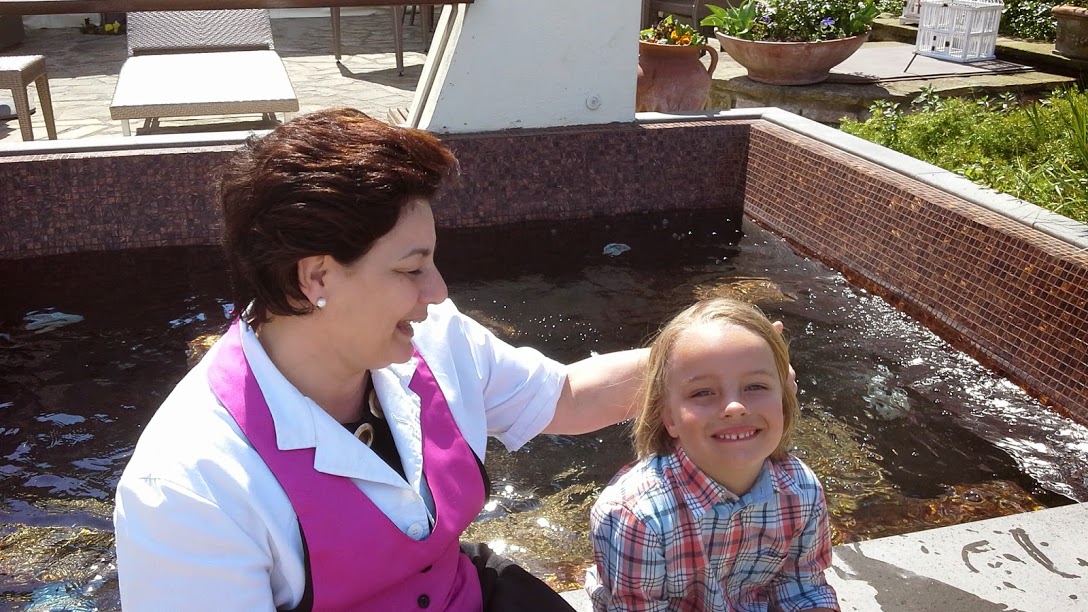
    Lucia & Jem


    * Lubra Casa Relax has 6 rooms from 75 euros a night including breakfast 

  • Tarn and La Terrasse de Lautrec

    20140826_113638-2The twisting, turning road through the plane tree contours of countryside south of Réalmont en route to our chambre d’hôte for the coming days is an absolute delight. We are in the heart of the Tarn département, deep in Cocagne country, and the picturesque route beyond the robust planes is flanked by fields of gold as far as the eye can see. Wheat, corn and sunflowers carpet the landscape, the latter now scorched and with heads bowed low as late summer slopes upon us bringing the once brightly smiling flowers to the end of their lifespan.
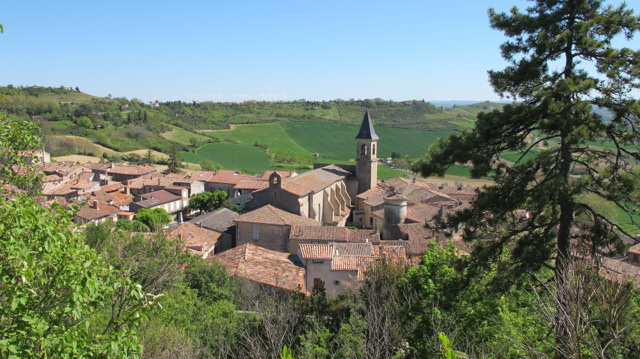
    We swoop round another curve along the scenic way, and all at once there she lies – Lautrec – huddled on a hilltop, her medieval ramparts draping down from the rocky peak and into the Agout Valley below, the views stretching panoramically to the Montagne Noire range silhouetting the southern rim in the distance and the regal Pyrenees beyond.

    lautrec
    Lautrec © https://robin-ellis.net

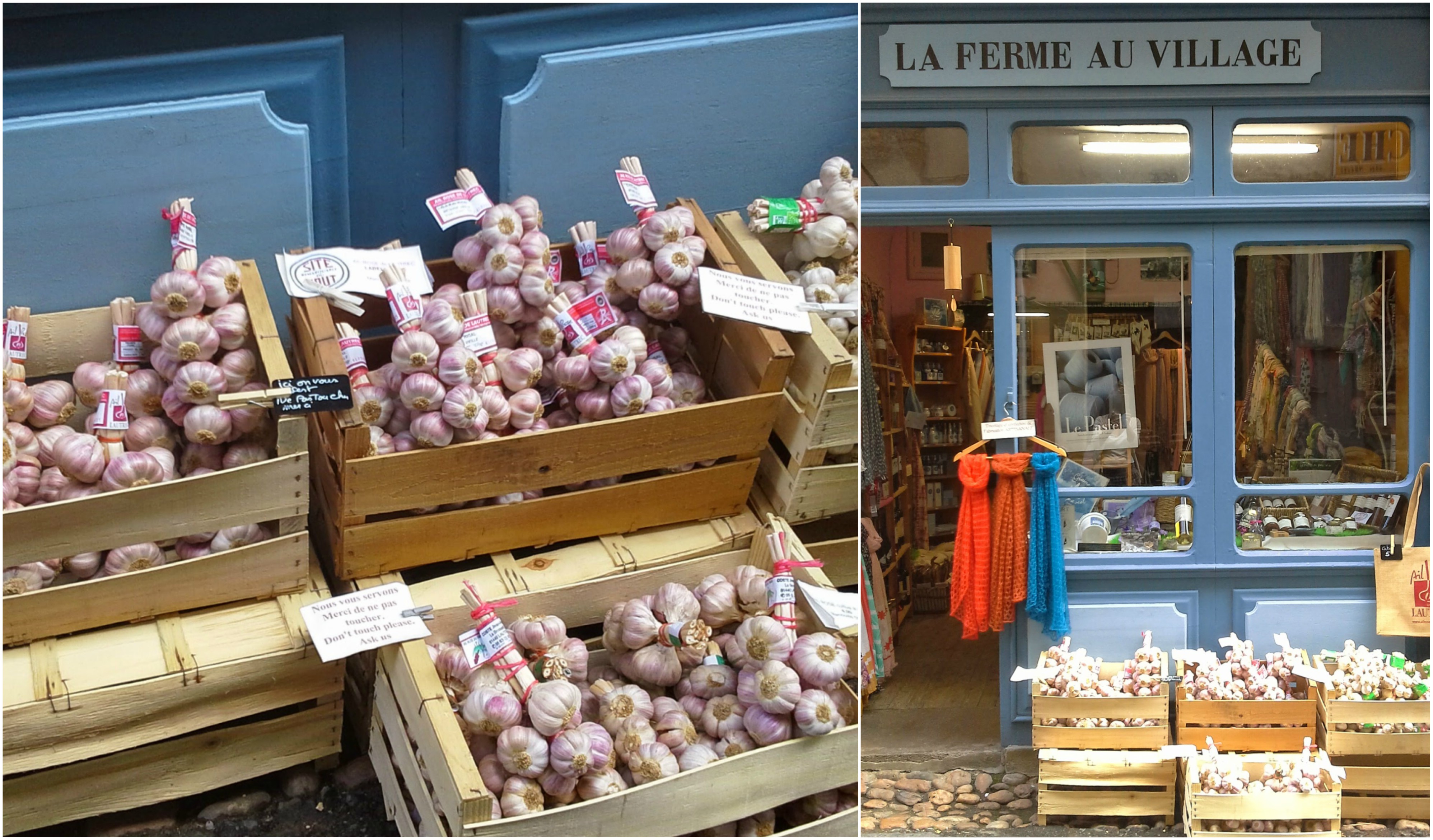
    Located between Albi and Castres, the Cité Médiévale of Lautrec is classified as one of France’s most beautiful villages in the official listing and was the birthplace of the family of renowned French artist, Toulouse-Lautrec. It is also France’s main producer of l’ail rose, and is certified with the Appellation d’Origine Contrôlée (AOC) for its famed pink garlic.

    befunky-collage

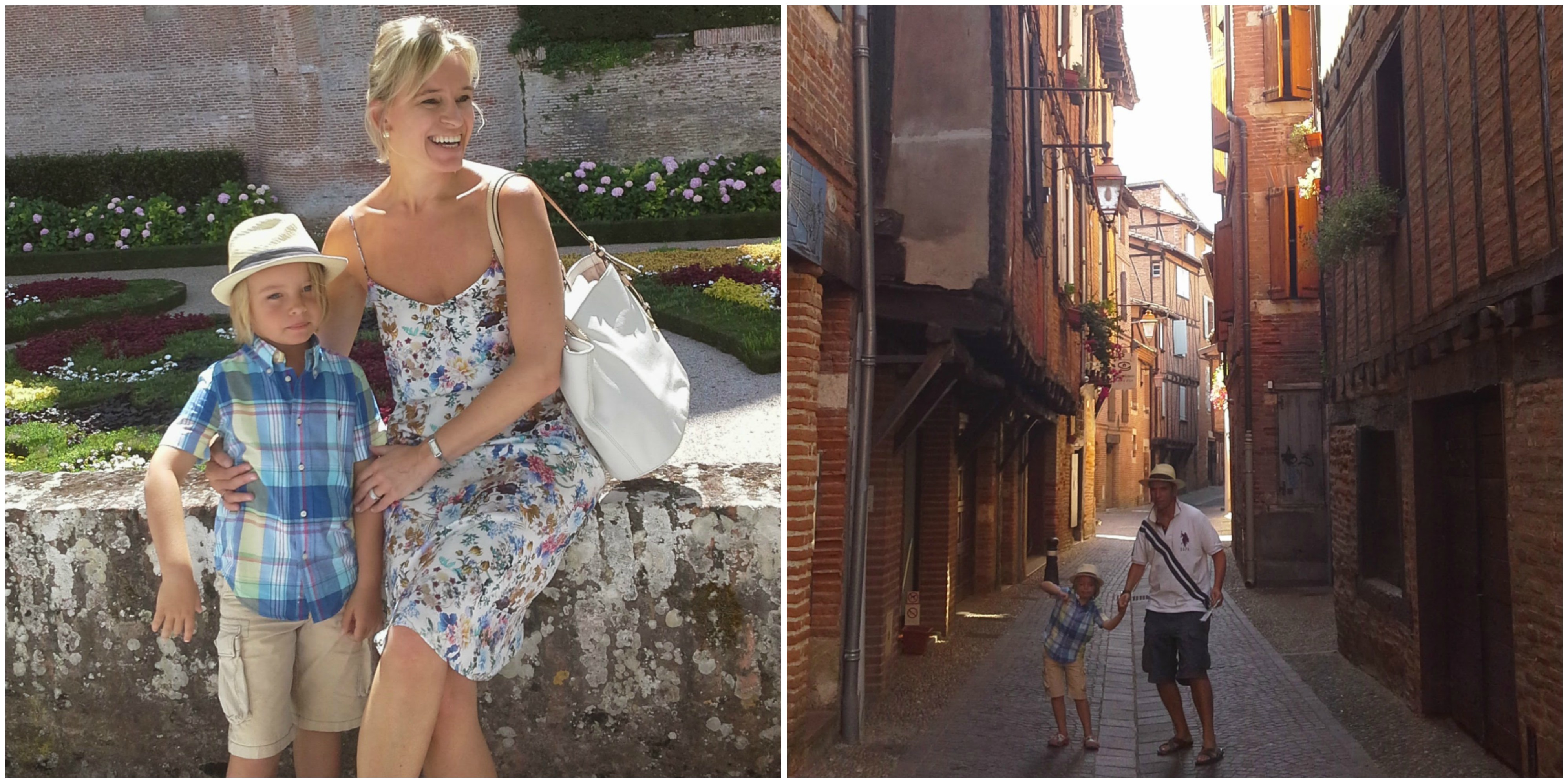
    We wind along the narrow cobbled paths of the village and park up in the pretty place where the 14th-century church lies. La Terrasse de Lautrec, our home for the next few days, flanks the façade to the north of the square, a 17th-century manor house as subtle from the roadside as it is sumptuous on the inside. Ever-excited about staying away, Jem – a sprightly four-year-old that summer – enthusiastically pushes with all the might he can muster on the mammoth wooden doorway and we step inside the cool bulk of the building and immediately back in time.

    In a hallway oozing history and crammed with charming curios, we adjust ourselves to the dusky interior, a world away from the dazzling afternoon sun dribbling in through the open French doors to the garden at the far side. A serenity suddenly takes hold; a sanctuary swathed in tranquility, the only sound a tinkling of a fountain from afar, and then Jem’s puckish laughter parading the peace as he gleefully plays with the property’s fluffball of a pet cat out on the patio.

    © www.laterrassedelautrec.com/
    © http://www.laterrassedelautrec.com/

    20140827_095531Our friendly hosts, Dominique and Philippe, take us on a tour of their enchanting bed and breakfast, once a former bishop’s palace, and which they bought over and beautifully restored some twelve years back. First, their jewel of a garden. The brilliance of the sun bathes us again as we step outside onto the magnificently manicured terrasse and amble through the box-lace and rose-covered formal garden originally designed by Le Nôtre to gracefully enhance the village ramparts they are built upon. Secluded corners and shaded vine trellises purport the perfect shelter for long hot days lazing on strategically placed sun loungers with the spectacular vista of the surrounding countryside as a picture postcard setting; and so too the inviting swimming pool is a haven in the afternoon heat. On cue, Jem carps on and on for his swimming shorts; until he spots the delightful koi pond, source of all that tranquil tinkling, and Dominique lets him feed the fish.
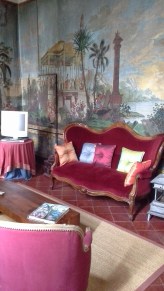
    20140827_100443It’s time to stroll back to the house, set as a sturdy backdrop to the stunning garden. Philippe leads us up the wide stone staircase to our suite, courteously carrying our two small cases; Jem scuffling up the steps behind us with his Lightning McQueen case, resolute on lugging it up all by himself. En route, we are acquainted with the salon on the first floor, an impressive lounge stuffed with yet more antiques, especially bird cages, for which the proprietors evidently have a penchant; and more striking still the extraordinary history behind the room, which has ornate ceilings and a traditional charm, and is decorated in the original 1810 frescoes depicting the Incas; the wallpaper is even listed historically for its design.
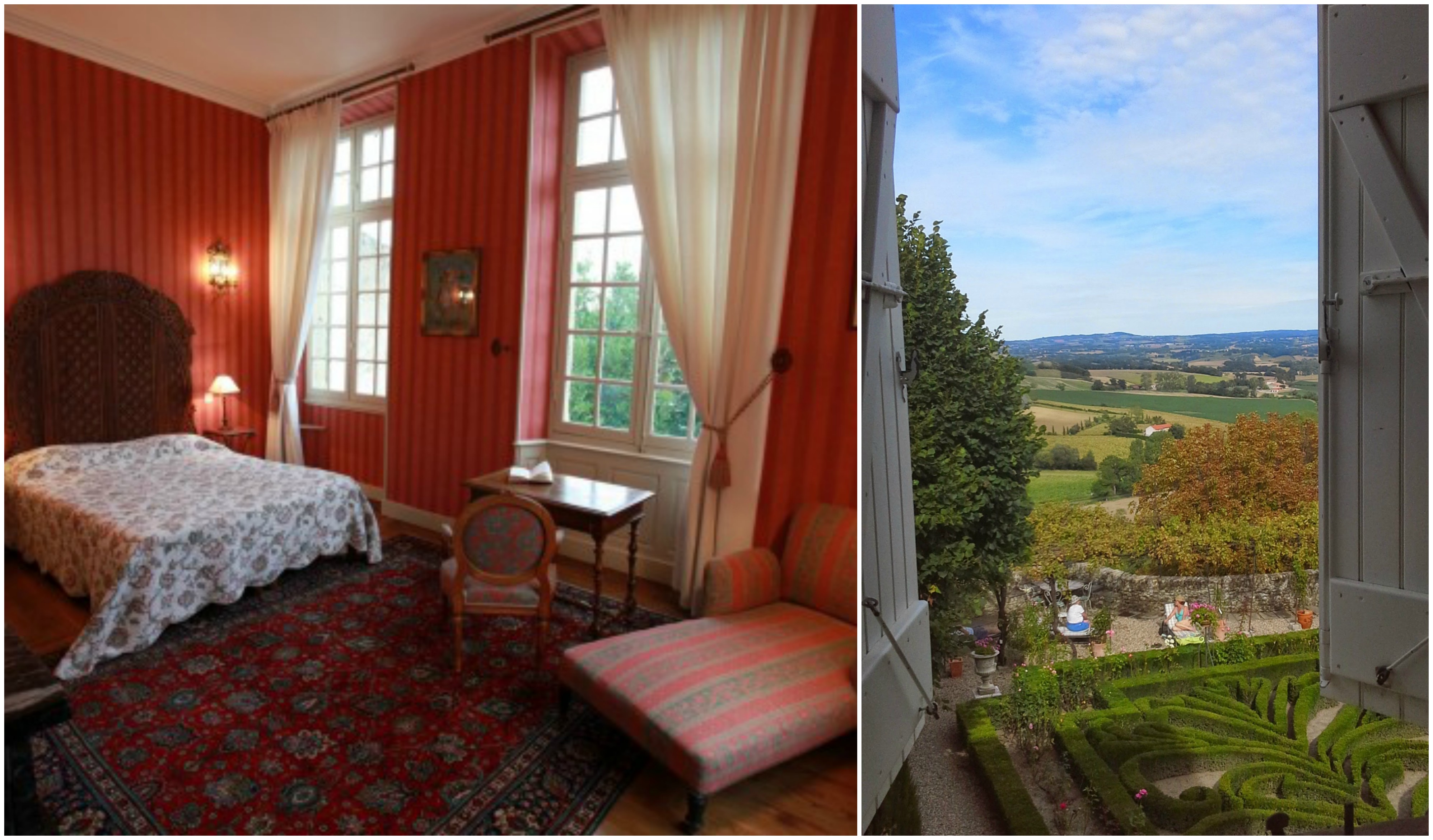
    Back on the landing, we discover Jem hunched down and digging his swimsuit and goggles out of his case. Somebody is more than ready for a dip in the cool and welcoming waters. But not before we have the chance to settle into our room – the Suite Caussade. Behind a thick oak door, we enter an ante-chamber – Jem’s bedroom on this occasion, or else a small salon if staying without children – and beyond a smaller wooden door, the large and luminous main bedroom. Overlooking the 200-year-old garden and rolling hills, the room is airy and high-ceilinged and the décor assumes a predominantly pink theme in a nod to the renowned l’ail rose of the region. The open casement windows have their hinged shutters half-closed against the heat, and the serene resonance of the fountain drifts up and fuses with the chime of the nearby church bells striking the hour.

    caussade
    L: Suite Caussade © http://www.chambresapart.fr

    The boys are poolside in no time, but I stay back awhile to take in my surroundings. I busy myself with some unpacking and listen to their footsteps crunch on the gravel pathway of the garden below, paired with Jem’s shrieks of pleasure at the anticipation of his favourite part of any day when on holiday – pool time.

    pool

    The afternoon passes in a perfect pall of reading, relaxing and romping about the pool. And later, settled under the grape arbor with the sweeping valley views as our backdrop, Dominique serves us an apéritif, before we take an early evening stroll around the village and up to the 17th-century windmill roosted right at the top, which is to become Jem’s preferred spot in the village, and where we proceed to take une promenade every evening thereafter. Winding down a cobblestoned lane from the windmill, we stop by for dinner at a great value little place serving local fare, Au Pied du Moulin. It’s a Sunday and the only restaurant open for business, so its open-plan setting is bubbly with all the other village visitors too.

    The next morning, sleep-satisfied and serene, we breakfast on the terrace of our abode to the tune of twittering birds and bees droning about the abundance of roses as we indulge in delicious pastries, home-made confiture and freshly-baked bread.

    20140826_093248

    We are here, in the Tarn, to take in the outstanding heritage and natural riches of this lesser-known corner of southern France. A selection of the départements in proximity – Dordogne, Lot, Lot-et-Garonne and Aude among them – are pretty prominent on the French tourist trail, but the Tarn is still somewhat unscathed by the circus of commercial tourism that sullies other areas of the south west in peak season, and this gives it an unblemished and bucolic charm that is getting harder and harder to find in the hectic hotspots at the height of a French summer.

    Lautrec is the ideal locale from which to explore the area, and over the next few days we enjoy a tantalising circuit of trips encompassing first the city of Albi – an architectural gem of a place celebrated for its UNESCO-listed Episcopal cité comprising the Sainte-Cécile cathedral and Palais de la Berbie, which together form the largest brick structure in the world; the palace also houses the museum of Albi’s most famous son, the painter Henri de Toulouse-Lautrec.

    albi
    Albi

    albi-2

    Also on the agenda, the Route des Bastides Albigeoises, the most wonderful drive through an undulating verdant landscape of vine-cloaked and sunflower-clad hills hailed as ‘la petite Toscane’ taking in a wealth of perched medieval bastide villages listed as ‘les plus beaux villages de France’, including Castelnau-de-Montmiral, Puycelsi, Bruniquel, Monestiés and Labastide-de-Lévis. And as voted by the French public on a scintillating TV show in the summer of 2014 as the crème-de-la-crème of the country’s prettiest villages – Cordes-Sur-Ciel, a honey-coloured village of half-timbered, Gothic and Romanesque houses hovering grandly atop a hill, its chocolate-box charming buildings cascading graciously down the fringes and into the fertile plain below.

    carroussel081
    © http://www.cordessurciel.fr

    Following our sightseeing stints, we return to our retreat that is La Terrasse de Lautrec each afternoon rewarded with the beauty we have seen, and ready for some well-earned repose, and some very deserved pool time for Jem after being dragged around historical landmarks for the best part of each day.

    La Terrasse de Lautrec:

    • 3 bedrooms and 1 suite (rates from 85 euros per night inc breakfast)
    • Gîte for 4–6 persons (rates from 700 euros per week)
    • Dominique prepares a delicious table d’hôte of regional cooking for 4 people of more
    • Cooking workshops available and run twice yearly by English actor, Robin Ellis, of original Poldark fame
    • Closed November–March

    Things to do:

    • Lautrec: listed as a ‘plus beau village de France’ | the first Friday of every August is the garlic festival, dedicated to the iconic l’ail rose of the region | 17th-century windmill, one of only a handful still working in southern France | pastel products – items coloured with the pastel blue dye extracted from the pastel woad plant for which the region is famous
    • Albi: a Unesco-listed city | Episcopal cathedral of Sainte-Cécile | 13th-century Palais de la Berbie and gardens | Toulouse-Lautrec Museum | Tarn river trip in a Gabarre boat
    • Drive the Route des Bastides Albigeoises and visit a wealth of other bastide villages in the vicinity, including celebrated Cordes-Sur-Ciel
    • Wine tasting in Gaillac, on the banks of the River Tarn
    • The Goya Museum in Castres
  • My local friend … in Vancouver

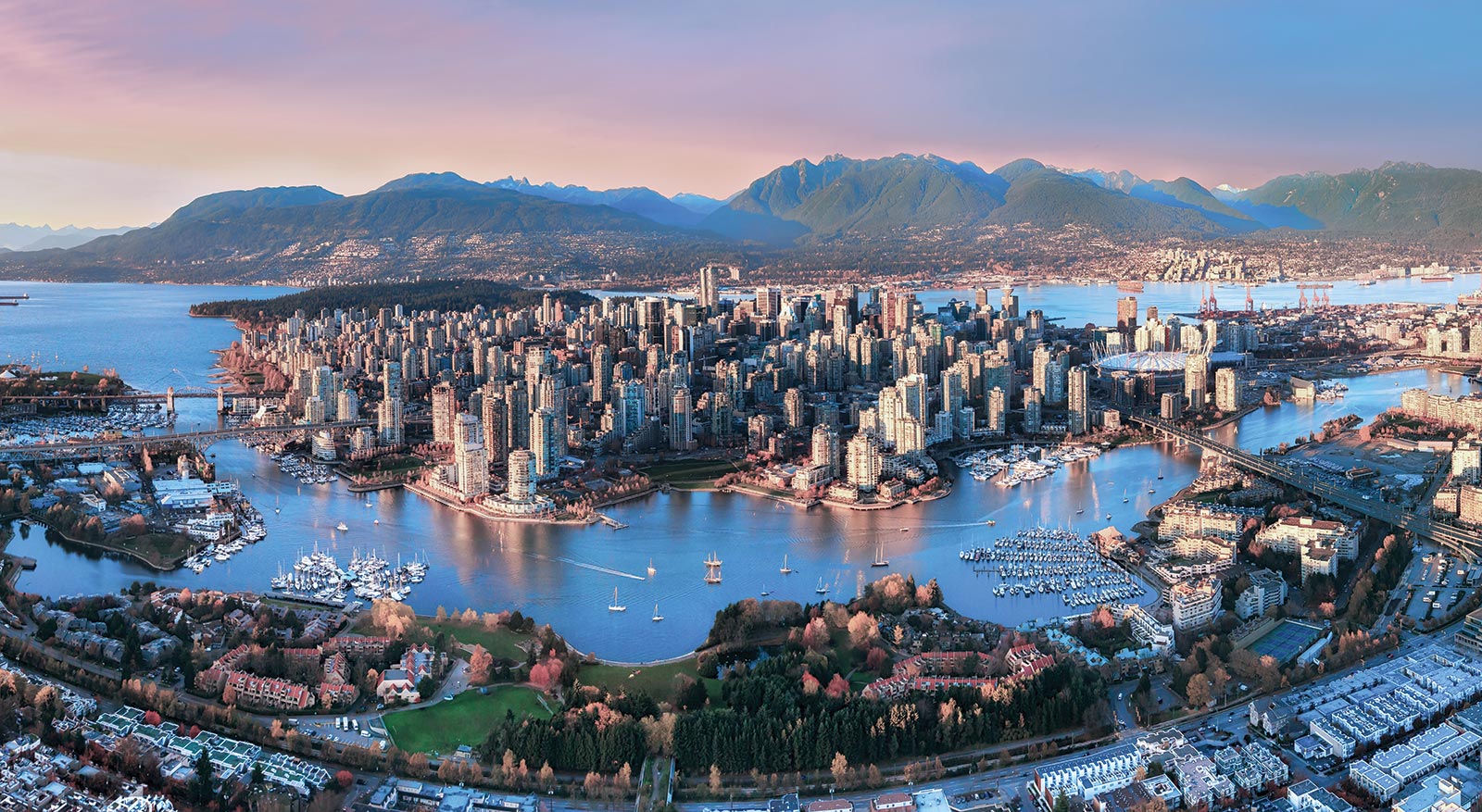
    annaAnna is an American illustrator and graphic designer, and mother of three, who grew up in Vancouver, British Columbia, and since 2006 has resided in Bordeaux, France. She revisits her hometown of Vancouver every summer. 
    _____________________________________________________________________________________

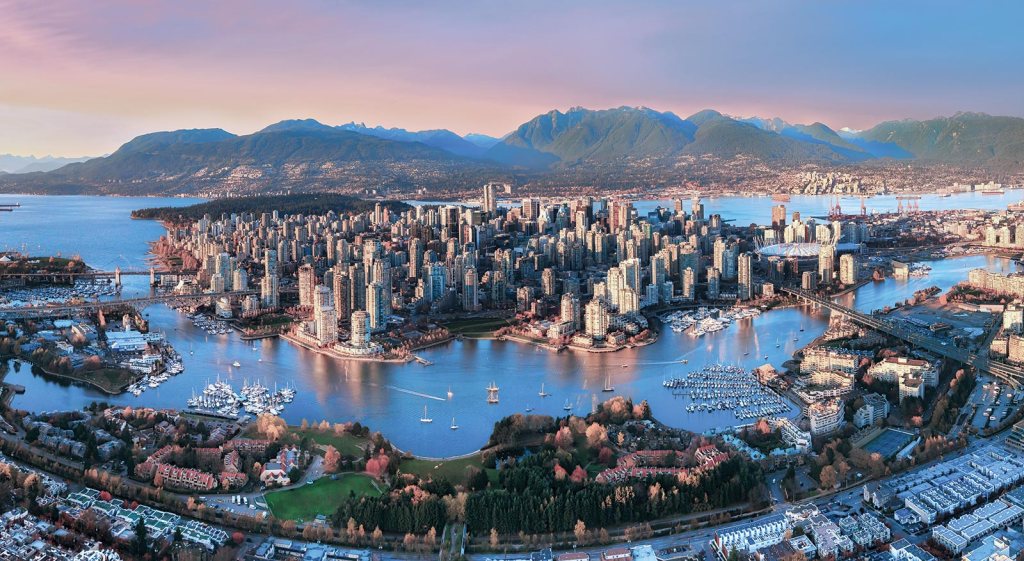
    Aerial_Sunset_Vancouver_d3_copy_1bb86ed0-1edc-4cda-841d-0b033ca0bb72
    Vancouver skyline © http://www.tourismvancouver.com

    Where is your first port of call when you return home?

    Visiting my family’s home, in New Westminster, British Columbia.

    How would you sum up your city in three words?

    mountains, evergreens, rain

    What are the top three tourist spots?

    Granville Island, Stanley Park and the Seawall, and Capilano Suspension Bridge.

    800px-stanley_park_vancouver_7889964786-1
    Seawall in Stanley Park © insidevancouver.ca


    01_bridge-549x3661
    Capilano Bridge © https://www.capbridge.com

    And what are your top three favourite spots?

    Granville Island, Gastown and VanDusen Botanical Garden.

    A hidden gem to share? 

    Dr. Sun Yat-Sen Chinese Garden – a Ming Dynasty style garden surrounded by protected walls in the heart of Vancouver’s Chinatown. Zulu Records, a vinyl emporium, is well worth checking out too.

    What’s your go-to eatery (café, restaurant, bar or all three)?

    There are so many good sushi restaurants in Vancouver, but if your budget isn’t small, the well-known Tojo’s restaurant is definitely worth trying out. Chef Tojo creates a unique custom meal for you called Omakase, avoiding any ingredients you are allergic to or may not like. Chef Tojo is also the inventor of the California roll. It’s expensive, and don’t expect enormous portions, but it’s a real gastronomic experience in Japanese cuisine.

    JapaDog is also a must – trendy food trucks that make delicious Asian-Style Hot Dogs.

    And Edible Canada in Granville Island is a unique bistro experience offering ‘new Canadian cuisine’ using the best quality food, wine, beer and spirits from all over Canada.

    What foods would you say are synonymous with your city?

    Vancouver is such a diverse city and there is an enormous choice of international cuisine. The city is famed for for its Pacific northwest salmon, and other fresh catches are popular too – reason enough to indulge in the delicious, fresh sushi found everywhere. You can also find incredible Indian, Chinese, Japanese, Korean, Indonesion, Greek, Lebanese, Italian and French food all over the city and the surrounding areas, not to mention the many great restaurants where innovative chefs are concocting very creative fusion cuisine. There’s no lack of choice for good eats in Vancouver, that’s for sure. And don’t forget to sample the wonderful local craft beer!

    Where do the locals hang out?

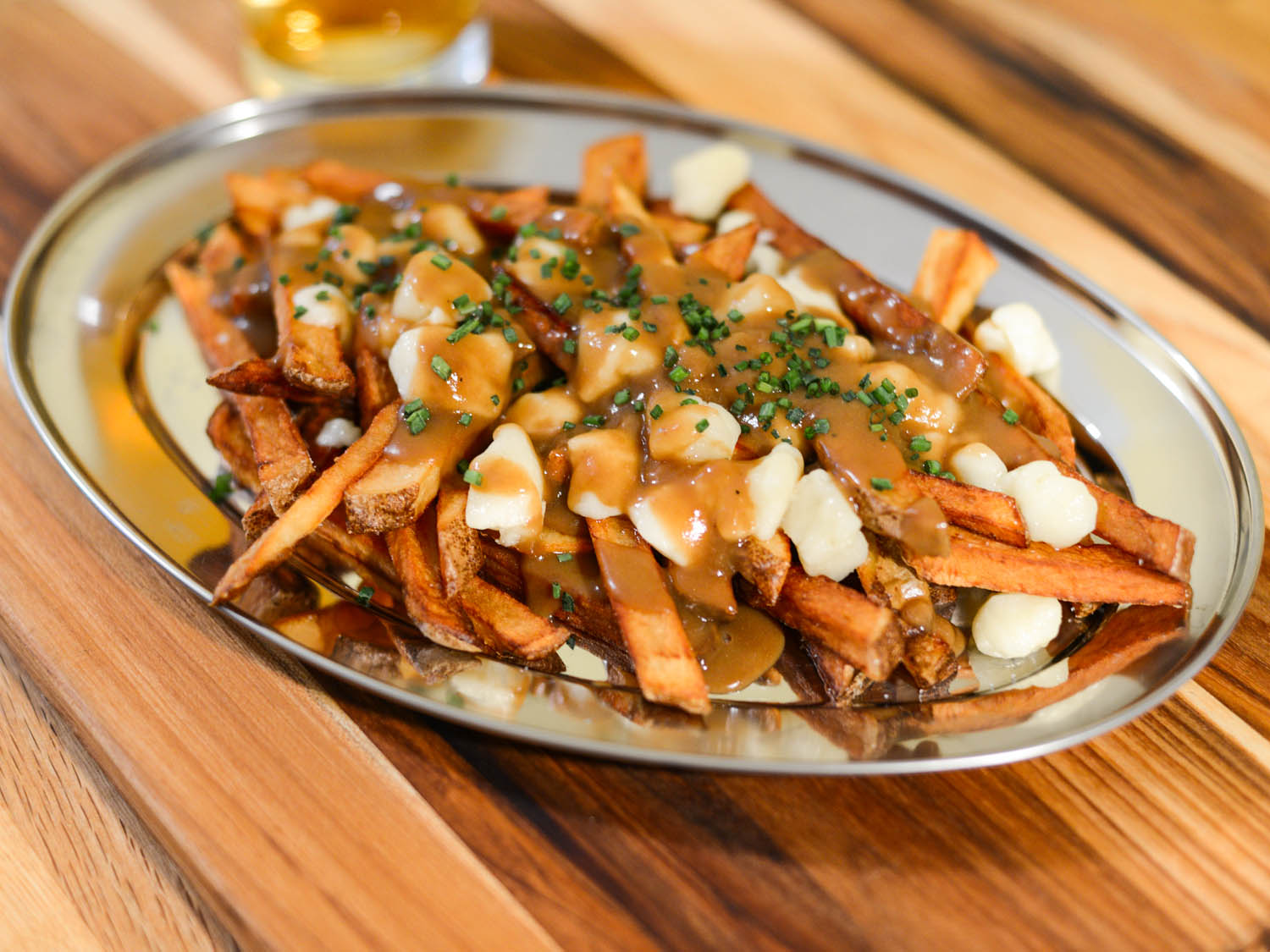
    The Naam vegetarian restaurant in Kitsilano. Also Cafe Deux Soleils and Platform 7 Coffee . And Belgian Fries in Granville Island for an amazing poutine – a traditional Canadian dish of French fries, cheese curds and gravy.

    a plate of poutine © http://www.seriouseats.com
    a plate of poutine © http://www.seriouseats.com

    Where does the hip crowd hang out?

    The Biltmore Cabaret, Electric Owl Social Club and Hotel at the Waldorf.

    A romantic hangout to suggest?

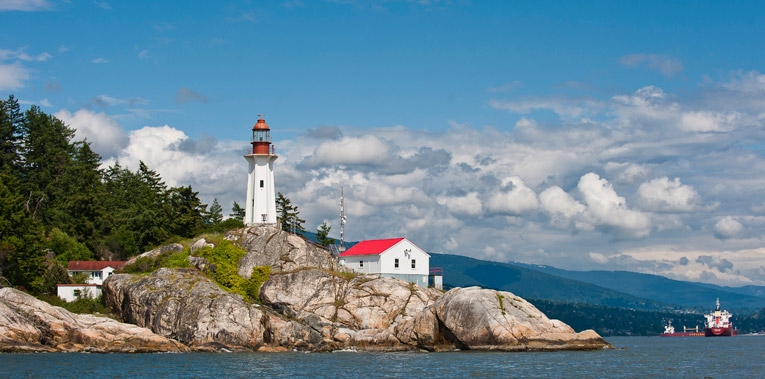
    Lighthouse Park in West Vancouver, or a walk on the Seawall in Stanley Park.

    Lighthouse Park © www.westvancouver.ca
    Lighthouse Park © http://www.westvancouver.ca

    Somewhere for a soothing sundowner?

    Kits beach, Third Beach or Wreck Beach (for those who like to be in the nude!).

    Where’s best for shopping?

    Granville Island, Vancouver’s Hudson Bay Company, Metrotown, Robson Street and Holt Renfrew.

    What’s the best way to get around?

    The Sky Train can take you all over the Vancouver area, and the bus system is excellent. If you want to go to sites in the local mountains or on the coast, it’s best to rent a car.

    Do you know of a great little place to stay?

    Vancouver is a big city, and really it’s best to get outside of the city – to Vancouver island, coastal towns or the mountains – to find a cosy spot to stay. Tofino on Vancouver Island is a great place to visit when the weather is warm, or take a couple of extra days and head to the mountains with a visit to Whistler.

    Tofino Clayoquot Sound © http://www.hellobc.co.uk
    Tofino Clayoquot Sound © http://www.hellobc.co.uk

    Where can you get a great city view?

    Grouse Mountain, Vancouver Lookout in the Harbour Centre and English Bay Beach all offer fantastic views.

    What tips would you give parents visiting the city with young kids?

    It’s a great city to visit with children. Science World, Macmillan Space Centre in Vanier Park, Stanley Park, historic Steveston village, the Kid’s Market in Granville Island, Capilano Suspension Bridge, the Aquarium, Maplewood Farm – these are all wonderfully kid-friendly places.

    Any city tours worth doing?

    Forbidden Vancouver Walking Tour.

    A great day trip from the city to recommend?

    If you can time it right, between March and October, a whale watching tour can be an amazing experience, especially to see the Orcas.

    whales
    whale watching © http://vancouverisland.com


    Any cultural faux pas to be aware of?

    None that I can think of.

    Best time to go?

    August and September usually guarantees the best weather.

  • Travels with … Miss Gallivant

    2015-05-30-20-54-20-4Travel-loving, book-adoring, wine-appreciating, France-living, style-savvy, novel-striving, chocolate-worshipping blogging mother of two based in Bordeaux.

    _____________________________________________________________________________________

    Your kind of holiday …

    Long, warm days discovering all things new in a destination whether sea, city or countryside; pootling about the place but with ample time for respite thrown in

    Where you last went to …

    East coast USA to stay with my brother and his family in the last October holidays – our first long-haul trip with a six-month old Sweet Pea. New York City was the focus, but we squeezed in no shortfall of side trips too, including Pennsylvania, Maryland, New Jersey and Connecticut. It was a fantastic family holiday, travelling fabulously together for the first time as the four of us

    ?????????????

    And next up …

    A long weekend to Porto kid-free and coming up! A bit of a reboot is required, and I do love a city break à deux

    Favourite go-to destination …

    I fell in love with the untamed beauty of the Cap Ferret Peninsula in south west France when I first moved to Bordeaux, and still I’m smitten eight years on. We go there whenever there’s an opportunity on a blue sky day, winter or summer, to escape the city and breathe in the wild Atlantic air

    Atlantic Ocean at Cap Ferret
    Atlantic Ocean at Cap Ferret

    A place you’d never go back to …

    I don’t fancy my chances at the D’Coconut Beach Resort on the tiny island of Pulau Besar off the coast of Malaysia ever again. It was the ultimate holiday hellhole when all we were in need of was a long bank holiday weekend break during our busy schedules while working in Singapore

    First holiday with friends …

    I ashamedly indulged in package holiday ignominy on the Costa del Sol before heading off to university (and have to admit it wasn’t the only time as a naive youngster, being the only type of holiday I could afford!)

    Favourite childhood holiday memory …

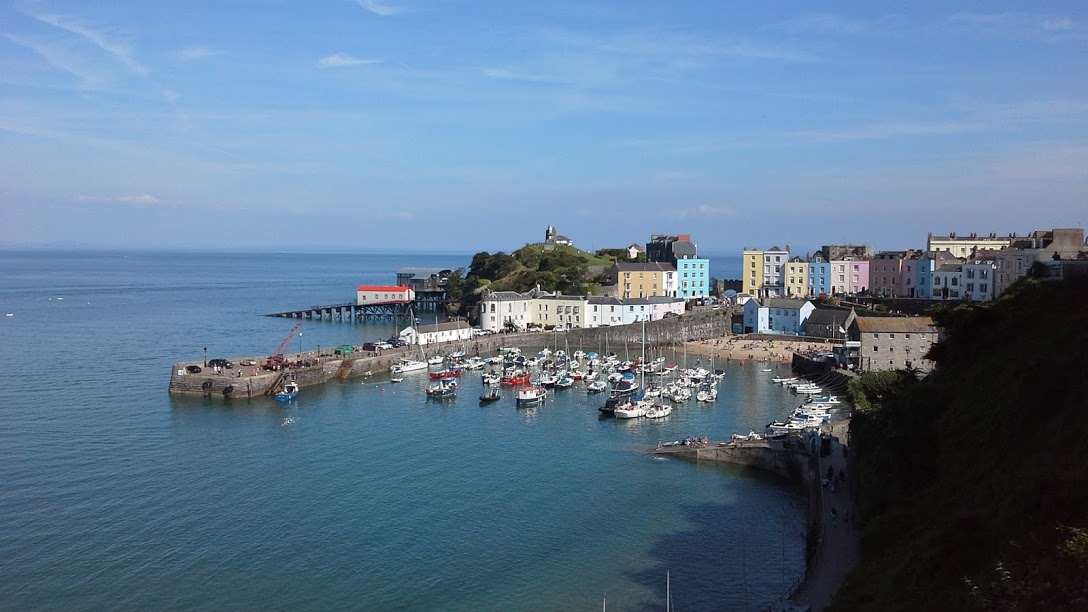
    Tenby, west Wales. It’s where we spent every summer and is profoundly ingrained in me for all those pure infant pleasures – playing on a beach, eating ice creams, spending pocket money in seaside souvenir shops, perusing the seashore; perfect and carefree, simply being

    Tenby in Pembrokeshire, Wales
    Tenby in Pembrokeshire, Wales

    Favourite view …

    The golden orb of sunset over a glistening ocean

    Where in the world you’ve felt happiest …

    Bordeaux, where we currently live and where my children were born. And Singapore – I moved to the other side of the world on a whim to live with Mr Gallivant eight months after meeting him, and it’s where our love subsequently bloomed

    Favourite destination …

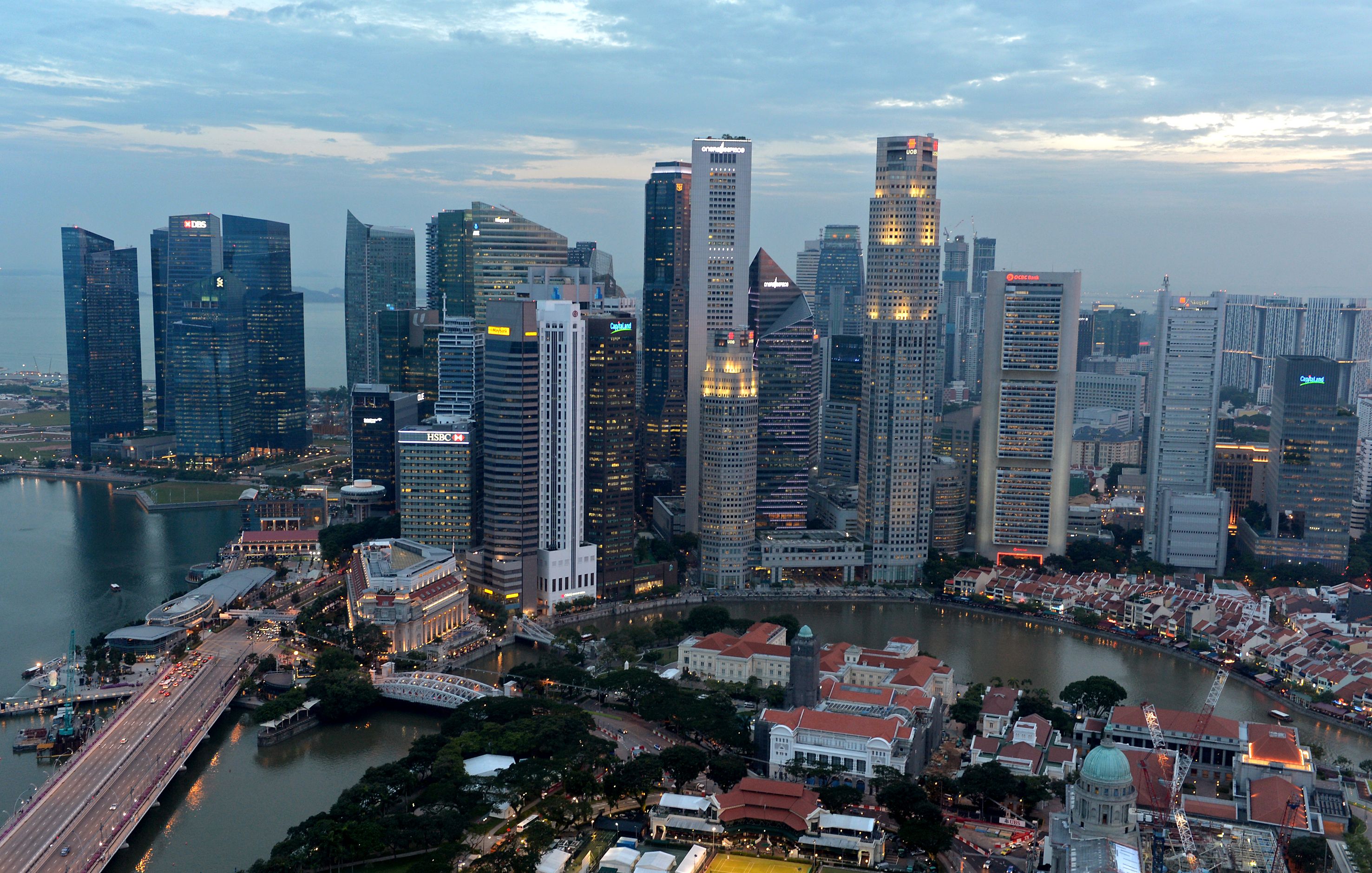
    I do have a particular affinity for south east Asia; the sights, the smells, the constant stir of activity in the chaotic streets. Based in Singapore for several years, we got to visit most countries in that part of the world and I love every one of them

    singapore
    Singapore skyline © http://www.businesstimes.com.sg

    Dream destination …

    There are so many – I’ve had a bit of an obsession with both The Grand Canyon and Uluru since I was a child, and still I’ve never made it to either. I’ve also not yet made it to California and long to do the Pacific Coast drive. Argentina has been on the list for a very long time too; in particular Patagonia for its extraordinary landscapes and Welsh-speaking identity

    A pinch-yourself moment …

    Probably when ambling along The Great Wall of China at Jinshanling one fiercely cold but brilliantly bright February day, quite unable to believe I really was there

    Favourite city …

    New York, London, Paris – the kind of cities you never ever get bored of no matter how many times you grace their streets

    An unusual travel experience …

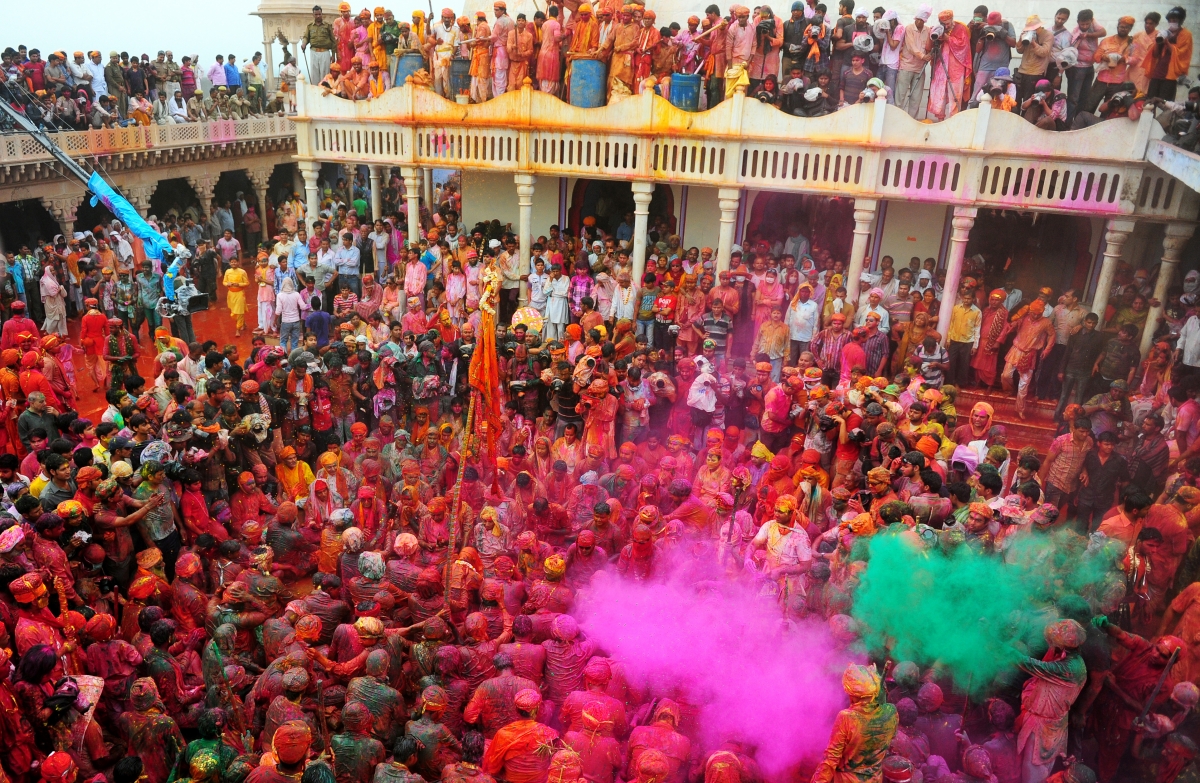
    Arriving at a Rajasthani village right in the middle of Holi Festival on my first day in India and getting swathed in pink powder paint before sampling some opium with the locals

    Celebrating Holi Festival at the Nandji Temple in India © www.ibtimes.co.uk
    Celebrating Holi Festival at the Nandji Temple in India © http://www.ibtimes.co.uk

    Best all-round travel experience …

    Our honeymoon in Nepal. It was a country I’d wanted to visit for as long as I can remember for its remoteness, mysticism, ancient culture and scenic marvels. We also got to spend a lot of time with a local family in Kathmandu which really gave an insight into understanding the way of life in such a very different part of the world, enhancing our travel experience tenfold

    223249_6584516413_3277_n
    Boudhanath Stupa, Kathmandu

    What you last ticked off your bucket list …

    The Amalfi Coast – and it lived up to every expectation

    Biggest culture shock …

    My first time out of Europe, in Morocco many moons ago, I fell for the classic waiter’s scam of ‘seeing the sights’ with a local, and was subsequently chaperoned around a local meat souk flaunting severed camel heads and masses of fetid animal flesh before being ushered off to the ubiquitous uncle’s carpet shop, made to drink an abundance of mint tea and bullied into buying an ornate rug!

    What you never travel without …

    A few good reads (and if I really divulge, a hairdryer)

    A secret little find to share …

    The Arcachon Basin isn’t hugely known outside France, but it is an exquisite little corner of the country. It boasts Europe’s highest sand dune, a stunning Atlantic coastline, beautiful bayside beaches, a clutch of charming seaside villages, and is renowned for its ostreiculture, pinasse boat trips and pine forests. And nothing can be more splendid than the sunset from the terrace of the Philippe Starck designed Co(o)rniche Hotel at the foot of the Dune de Pilat, preferably while sipping on something ice cool and alcoholic

    Sunset on the terrace of the Co(o)rniche Hotel, Pyla
    Sunset on the terrace of the Co(o)rniche Hotel, Pyla
    Sunset over the Arcachon Basin
    Sunset over the Arcachon Basin

    A guilty holiday pleasure …

    Indulging in G&Ts in grand colonial and heritage hotels around the world – Raffles in Singapore, Pera Palace in Istanbul, The Winter Palace in Luxor, FCC Angkor in Siem Reap to name a few

    A literary travel inspiration …

    Following in the footsteps of the likes of Somerset Maugham, F Scott Fitzgerald, Ernest Hemingway and Graham Greene and seeking out the places where these literary greats based some of their classics, such as Maugham’s travels in Asia, the Vietnam of The Quiet American, Fitzgerald’s French Riviera and Hemingway’s love of Spain

    I lost my heart in …

    Normandy – I travelled there nearly 16 years ago for a wedding only to meet my future husband!

    What travel means to you …

    There is nothing more enriching than exposure to a world beyond your own

  • Scrunch up your sightseeing

    csutq6bxgaambpzI came across Crumpled City maps at the Bordeaux Tourist Office recently. What a novel idea to bring to an end that obligatory folding battle with the maps of old! Read it and roll up into a ball when done; ram it into your bag or pocket; rain or shine, these maps are resilient, rip-free and reusable time and again.

    There are over 50 cities currently available covering destinations across the globe. An award-winning Italian innovation, the Palomar company which produces the maps has a range of other similarly imaginative products, including wall map diaries, personal globes and crumpled maps for kids.

    crumpled-city
    © https://www.palomarweb.com/product-category/crumpled_maps/


  • https://www.zincflyte.com/
    https://www.zincflyte.com/

    These new scooter suitcases for kids by Zinc Flyte are simply delightful, and perfect for zipping alongside fretting parents on that tiresome walk to the terminal gate. They come in mini and midi sizes accommodating your nippers from 2 to 8 years old, and this year the maxi size will be launched. Priced from £59.99, they’re not a steal, but long-lasting cabin-friendly luggage for jet-setting little ones is certainly a justifiable buy in my book.

    I’m particularly partial to Olivia the Owl for when our Sweet Pea is a tad older.

  •  

    rebeccaBorn of a love of travel and a compulsive interest in chic though not financially crippling places to stay, Miss Gallivant aspires to take you on an alluring journey of the memorable dalliances she and her family – Mr Gallivant, Jem and Sweet Pea – indulge in whenever there is a spare moment or a standby reserve in cash. Always on the lookout for a little luxury for less, Miss Gallivant prides herself on seeking out exquisite finds which won’t instinctively break the bank. After all, what is a holiday without a slice of comfort? Considering your place and space as much as the holiday itself classifies the whole experience of escapism.

    Miss Gallivant is Rebecca Legros. Based in Bordeaux, one of France’s most culturally charming cities, she writes and edits for a living. And in any ounce of free time she and her family travel, either locally or further afield, appreciating the beauty of south west France and the pull of the great beyond. Before settling in Aquitaine eight years ago, both Rebecca and her French husband dabbled in work and life on a range of continents, clocking up ten different countries between them bridging Europe, Asia and North America. Rebecca originally hails from the rugged coast of south west Wales, her husband from the equally bracing north west shores of Normandy. When picking out the perfect place for a move to France in 2008, a seaside location was a must. But into the bargain they bunched warmer weather, a suitably sized city and reasonably easy access to the rest of the globe. Bordeaux was the answer. And the fact that the region only produces the best wines in the world was a bit of a draw besides.

    familyThe south west of France genuinely offers the whole package, so they upped sticks for the umpteenth time and settled down to life in the fine city of Bordeaux where Jem and Sweet Pea, their beautiful Franco-British bundles, were born in 2009 and 2016 respectively.

    Always with an eye to the finer things in life, Miss Gallivant hopes you will enjoy her prose and ponderings into the destinations and delectable places to stay featured on her personal blog for like-minded travellers – with or without a toddler or two in tow.

  • on-travelI love to travel. No matter if it is near or far. It’s about knowing what is beyond the horizon; where a road leads to; what that place on the map with the peculiar name is like. Curiosity. It drives me, is instilled in me, in my genes. As a child, I recall urging grown-ups to test me on world capitals just for fun. I’d pore over an atlas for hours. I’d make up geography quizzes for an evening of family entertainment. I’d always want to take a different way home. The same route was far too boring. ‘Let’s take this direction for a change’ became a familiar mantra of mine.

    I had a grandfather who never got to travel. He had to make do with armchair travelling due to circumstance. But he had the itch too, I could tell. I learnt from him. He introduced me to his tattered old copies of the Pears Cyclopaedia and explained the world and its wonders to me, the ever-inquisitive child. He learnt French and Greek without ever setting foot in those countries. I got to live in both. He had to travel vicariously, while I always vowed to make it out there one day from my small-town world in Wales.

  • Go back

    Your message has been sent

    Warning
    Warning
    Warning
    Warning

    Warning.